TPU (flexible filament)
Published · Researched 2026-09-20
Overview — what it is, best uses, key context
TPU (thermoplastic polyurethane) is the standard flexible FDM filament, measured in Shore hardness: 85A (very soft, rubber-band-like) up to 95A/98A (semi-flex, like a shoe sole). It is the go-to for phone cases, watch bands, gaskets/seals, vibration dampers, cosplay props, drone parts, and wearable prototypes. NinjaTek (Fenner Drives) originated the premium flexible category with NinjaFlex 85A (the "original flexible filament") and the faster-printing Cheetah 95A; the mainstream 95A market is now dominated by Polymaker (PolyFlex TPU95 / TPU95-HF), eSun, Overture, and Bambu Lab's high-flow TPU 95A HF and TPU for AMS (~68D, AMS-compatible). Community consensus: direct-drive extruders are strongly preferred for 85A; 95A works on careful short Bowden setups; stringing and speed limits are the perennial fights; TPU is moderately hygroscopic and must be dried before use (Bambu: 70 °C/8 h for TPU 95A HF). Prices observed 2026-09-20.
Key specs
| Property | NinjaFlex 85A (NinjaTek) | Cheetah 95A (NinjaTek) | PolyFlex TPU95 (Polymaker) | PolyFlex TPU95-HF (Polymaker) | eSUN TPU 95A | Overture TPU 95A | Bambu TPU 95A HF | Bambu TPU for AMS |
|---|---|---|---|---|---|---|---|---|
| Shore hardness | 85A | 95A | 95A | 95A | 95A | 95A | 95A | ~68D (reads per 3dprinting.com; UNVERIFIED from Bambu) |
| Tensile strength (MPa) | UNVERIFIED (no TDS figure found) | UNVERIFIED | not published in shop table | UNVERIFIED | 43 | UNVERIFIED | 27.3 ± 0.8 | UNVERIFIED |
| Elongation at break | 660% (mfr marketing copy) | 580% (mfr marketing copy) | 551.2% (ISO 527) | UNVERIFIED | 597% | UNVERIFIED | >650% | UNVERIFIED |
| Nozzle temp (°C) | 220–230 | UNVERIFIED | 210–230 | 200–220 | 210–240 | 210–230 | 220–240 | UNVERIFIED |
| Bed temp (°C) | 20–50 | UNVERIFIED | 25–60 | 25–50 | 25–60 | 25–60 | 30–35 | UNVERIFIED |
| Max recommended print speed | ~25 mm/s (guide) | "fastest flexible filament" per mfr (Bowden-capable) | 40 mm/s | 40–100 mm/s (3x claim vs standard) | 40 mm/s | 40 mm/s | <200 mm/s | 150 mm/s (guide) |
| AMS / Bowden | Direct drive only (per MH: Bowden "requires very specific fine-tuning") | Yes — patented low-friction exterior; Bowden OK | Yes, careful | Yes | Yes, careful | Yes, careful | NOT AMS compatible (per Bambu) | AMS-fed |
| Moisture sensitivity | Moderate — dry before use | Moderate | Moderate | Dry 70 °C/8 h (HartSmart listing) | Moderate — dry 50–55 °C | Moderate | Dry 70 °C/8 h | UNVERIFIED |
| Heat deflection temp | N/A (flexible; Vicat not published) | N/A | N/A | N/A | N/A | N/A | N/A | N/A |
Notes: (1) NinjaFlex tensile strength figure not found in current listings — NinjaTek publishes elongation (660%) and abrasion claims instead. (2) Polymaker's shop table lists PolyFlex TPU95 "Young's modulus" as "33.6 GPa (ISO 527)" — implausible unit for TPU (likely MPa); flagged as a suspected unit error, not used above. (3) Bambu TPU 95A HF's 27.3 MPa tensile vs eSUN's 43 MPa reflects the high-flow formulation trade-off; both are manufacturer-published.
Pricing — per-kg spool prices (all observed 2026-09-20; USD unless noted)
| Brand / product | Size priced | Price observed | Per-kg equivalent | Source + date |
|---|---|---|---|---|
| NinjaTek NinjaFlex 85A | 1 kg | $118.14 | $118.14/kg | MatterHackers product listing (page crawled 46 days prior; price as observed 2026-09-20) |
| NinjaTek NinjaFlex 85A | 0.5 kg, list $55.00 | $54.25 (MH street) | ~$108.50/kg | MatterHackers listing (last updated 2 days prior, obs. 2026-09-20) |
| NinjaTek NinjaFlex 85A | 1 kg, 2.85 mm | $99.67 | $99.67/kg | Dynamism listing (crawled 3 days prior, obs. 2026-09-20) |
| NinjaTek Cheetah 95A | 1 kg, 2.85 mm | $99.67 | $99.67/kg | Dynamism listing (crawled 3 days prior, obs. 2026-09-20); 1.75 mm 1 kg price UNVERIFIED |
| NinjaTek Cheetah 95A | 0.5 kg, 1.75 mm | $63.49 CAD | ~$127 CAD/kg | filaments.ca (crawled 91 days prior — somewhat stale, obs. 2026-09-20) |
| Polymaker PolyFlex TPU95 | 0.75 kg spool, $29.99 MSRP | $29.99 | ~$39.99/kg (computed) | shop.polymaker.com (crawled 3 days prior, obs. 2026-09-20) |
| Polymaker PolyFlex TPU95-HF | 1 kg, $49.99 MSRP | $49.99 | $49.99/kg | shop.polymaker.com + HartSmart (crawled 3 days prior, obs. 2026-09-20) |
| eSUN TPU 95A | 1 kg | ~$18–22 street | $18–22/kg | 3dprinting.com "Best Flexible Filaments 2026" guide (crawled 2 h prior, obs. 2026-09-20) — guide estimate, not a live cart price |
| Overture TPU 95A | 1 kg | $22.49–26.09 | $22.49–26.09/kg | Amazon.com listing snapshots (crawled 128–343 days prior — STALE snapshots, obs. 2026-09-20); 3dprinting.com 2026 guide estimates ~$23/kg |
| Bambu Lab TPU 95A HF | 1 kg w/ spool | $41.99 | $41.99/kg | Bambu Lab US store via shop.app (crawled 7 days prior, obs. 2026-09-20) |
| Bambu Lab TPU for AMS | 1 kg | ~$35 | ~$35/kg | 3dprinting.com 2026 guide estimate — UNVERIFIED from Bambu storefront |
Price ladder per kg (rounded, 2026-09-20): eSUN ~$20 < Overture ~$23 < PolyFlex TPU95 ~$40 ≈ Bambu TPU 95A HF $42 < PolyFlex TPU95-HF $50 < Cheetah ~$100 < NinjaFlex ~$110–118. NinjaTek charges roughly a 3–5× premium over budget 95A.
What's needed
- Extruder: direct drive strongly recommended, especially for 85A (NinjaFlex on Bowden "will require very specific fine-tuning" and tends to jam — MatterHackers). Cheetah's low-friction skin makes it the most Bowden-tolerant flexible; Bambu TPU 95A HF prints up to 200 mm/s but is NOT AMS compatible (soft filament + AMS = tangle risk); Bambu's separate "TPU for AMS" (~68D, stiffer) is the AMS answer.
- Drying: TPU is moderately hygroscopic — stringing is the #1 symptom of wet TPU. eSUN: dry 50–55 °C before sessions; Bambu TPU 95A HF: dry 70 °C/8 h; PolyFlex TPU95-HF: 70 °C/8 h. Store in dry box with desiccant (<20% RH target for HF grades).
- Nozzle: standard brass is fine (TPU is not abrasive). Hardened only needed for filled flexibles (e.g., TPU-GF).
- Bed surface: PEI/textured PEI, glass, or BuildTak; 25–60 °C typical (Bambu HF: 30–35 °C + glue). NinjaFlex famously needs no glue/tape on a standard bed (per NinjaTek marketing).
- Speed/retraction: slow down (25–40 mm/s for standard 95A; 85A slower still), minimize retractions, keep filament path constrained (no gaps between extruder gear and hotend entry). Disable or reduce "cooling slowdown" tricks cautiously — see Siraya Tech TPU-GF profile note in Sources.
Brand/support reality
- NinjaTek (Fenner Drives, USA): premium originator; warranty/support via resellers (Dynamism notes "special order terms: payment in full, cannot be returned or cancelled" and "unlimited toll-free support" via Dynamism, not the mfr directly). US-based manufacturer; parts N/A (filament only). Reputation: the reference quality standard, but expensive and slower to print.
- Polymaker (CN, global): best-in-class published technical data (TDS/SDS downloads, printer presets at presets.polymaker.com), wide reseller network; 2.85 mm PolyFlex being discontinued per wholesale site (obs. 2026-09-20). Support via regional distributors.
- eSun (CN): budget leader, huge color range incl. transparents; publishes mechanical data (43 MPa / 597%); factory pre-dried but packaging not hermetic (moisture possible in transit — 3dprinting.com).
- Overture: Amazon-native value brand, 4.6★/5,267 ratings on Amazon listing snapshot; clean winding reputation.
- Bambu Lab: official filament profiles + RFID in Bambu ecosystem; high-temp reusable spool included with TPU 95A HF; shop.app US storefront shows 4.9★/144 ratings for TPU 95A HF. Warranty via Bambu support (mixed community reputation — not independently verified here).
Community verdict
Maker consensus (3dprinting.com 2026 guides, MatterHackers product copy, Siraya Tech FB group posts, IG maker reels): Polymaker PolyFlex TPU95 is the "reference 95A" for consistency; Overture/eSUN are the value defaults where consistency matters less than price; NinjaFlex remains the softest-feeling 85A and the original, but its ~$110+/kg price and slow print speeds push most users to 95A; Bambu's TPU 95A HF earns strong early ratings (4.9/144) for genuinely faster flex printing, though it is moisture-sensitive and AMS-incompatible. Across all brands, the community's #1 TPU advice is unchanged: dry the filament, slow down, and use direct drive for anything softer than 95A.
Sources consulted
- FB groups searched (facebook-cli, account Luc Schurgers, verified 2026-09-20):
groups search --keywords "3D printing TPU nylon"→ returned 5 groups: Siraya Tech Filament Users (437 members), Anycubic Kobra 3 Max Combo (1000), 3D Toddler Mobility Trainer - MAKERS CHAT (821), ADIMLab 3D Printer (3000), 3D Printed Audio and Hi-Fi Projects (8000). Keyword matching was poor; none were general TPU/nylon discussion groups.groups search --keywords "3D printing"→ 3D Printing World (10,000), 3D Printing (17,000), I Need a 3D File (324), 3D Printing - Turn Your Hobby Into a Profitable Family Business (270), 3D Printing Club (2,000).groups posts --group-id 1436696123263844 --query "TPU"("3D Printing", 17k) → no results;--query "nylon"→ no results.groups posts --group-id 1995965277443191 --query "TPU"("3D Printing World", 10k) → no results.groups posts --group-id 1751209905703122 --query "TPU"(Siraya Tech Filament Users) → 7 posts, mostly vendor marketing: TPU-GF 18%-off sale (Amazon link), Roamr TPU Air 80A/85A promo, TPU-GF layer-adhesion profile fix (disable "Cooling Slowdown" + high K-value), PPA-CF frame + TPU 85A grips push-up bars print, TPU Air neck-stretcher print, Roamr TPU Air HR 80A shoe print, Siraya TPU 85A replacement tires for a Worx Landroid mower (printed on Bambu A2L).--query "nylon"→ no results.
- IG/social (social.search, 4 queries, 2026-09-20): zeitgeist results included IG reel by @thefreshprintsofbellheir (45K followers, 2026-08-04) printing a large TPU cushion in Siraya Tech Flex TPU AIR (green) on an Elegoo OrangeStorm Giga (~230 °C nozzle, 45 °C bed) and stress-testing flexibility/tear strength; IG reel by cosplayer Yuji Hannah (2026-08-28) printing a full League of Legends Lux armor set in flexible TPU on a Bambu Lab H2D, noting TPU prop durability.
- Web:
- https://3dprinting.com/filament/best-tpu-filament/ (Best TPU Filament 2026; price/speed table: PolyFlex ~$30/kg, HF ~$35/kg, Overture ~$23/kg, eSUN ~$20/kg, NinjaFlex ~$45/kg, Bambu TPU for AMS ~$35/kg — guide approximations)
- http://3dprinting.com/filament/flexible-filaments/ (Best Flexible Filaments 2026; eSUN TPU 95A 43 MPa / 597% / $18–22/kg)
- https://www.dynamism.com/ninjatek.html (NinjaFlex/Cheetah listings; Cheetah 2.85mm 1kg $99.67; NinjaFlex 2.85mm 1kg $99.67)
- https://www.matterhackers.com/store/c/ninjatek-ninjaflex-series (NinjaFlex 1kg $118.14, 0.5kg $54.25, Bowden warning)
- https://www.matterhackers.com/store/3d-printer-filament/ninjaflex-sky-blue-tpe-3d-printing-filament-1.75mm (list $55.00)
- https://shop.polymaker.com/products/polyflex-tpu95 ($29.99/0.75kg; elongation 551.2%; 210–230 °C)
- https://shop.polymaker.com/products/polyflex-tpu95-hf ($49.99/1kg)
- https://hartsmartproducts.com/products/polymaker-polyflex-tpu95-hf (dry 70 °C/8 h; 200–220 °C)
- https://www.3djake.com/bambu-lab/tpu-95a-hf-yellow (Bambu TPU 95A HF $33.48/kg intl; dry 70 °C/8 h; NOT AMS compatible)
- https://shop.app/products/7649387806856/tpu-95a-hf (Bambu US: TPU 95A HF $41.99/kg, 4.9★/144 ratings; PAHT-CF $49.99; PA6-CF $42.99 — spool size for PA6-CF not stated)
- https://www.digitmakers.ca/collections/all/products/bambu-lab-tpu-95a-hf-1-75mm-1kg (Bambu TPU 95A HF TDS: 27.3 MPa, >650% elong, 220–240 °C, bed 30–35 °C)
- Amazon.com Overture TPU snapshots ($19.67–26.09 across crawls)
- https://www.tanotis.com (NinjaFlex 660% elong / Cheetah 580% elong marketing specs)
- https://filaments.ca/collections/ninjatek (Cheetah 0.5kg $63.49 CAD)
- https://www.fabbaloo.com/2016/07/ninjateks-two-new-3d-printer-filaments (Cheetah launch context; historical)
Images
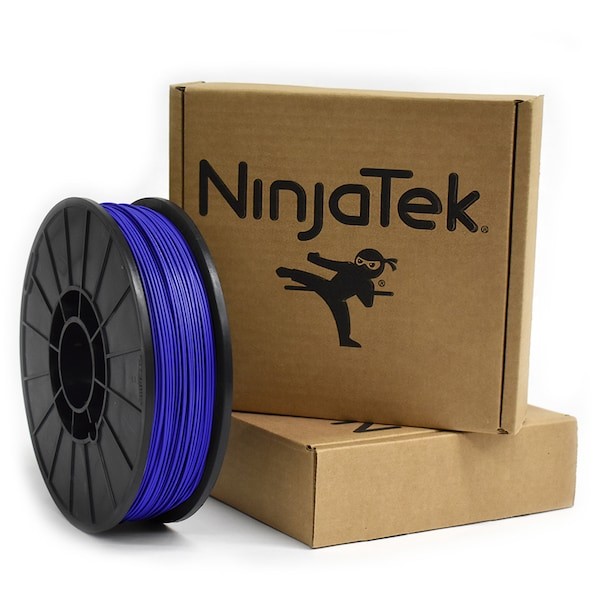
tpu-01.jpg— PRIMARY exact-product shot: NinjaTek NinjaFlex 1.75 mm 1 kg spool, Sapphire (retailer product photo, zoro.com). Image tpu-01tpu-02.jpg— NinjaTek NinjaFlex 3.00 mm 1 kg spool, Lava orange (retailer product photo, amazon media). Slight variant: 2.85/3.00 mm diameter rather than 1.75 mm.tpu-03.jpg— Example application: 3D-printed flexible phone cases in TPU (blog artwork from siraya.tech "How to Make 3D Printed Phone Cases with TPU"; note: appears AI-generated illustration, not a photo of an actual print).- Discovery via
/opt/hatch/bin/image-search("NinjaTek NinjaFlex spool 1kg", "TPU flexible 3D printed phone case"); all URLs verified 200 + image/* via curl HEAD before download; converted to JPEG q90 with PIL.
Deepening pass (2026-09-20)
Social layer: Facebook group search found one real match this pass — the existing Siraya Tech filament group (1.1k members, brand-run). The big general groups returned zero TPU-discussion posts on keyword search (8 queries total across the batch: polypropylene, POM, sintering, PVA, BVOH, PEEK, ABS-like resin, silk PLA — none hit). Threads keyword search: zero results for all queries. Instagram: no public topic search via the CLI — no IG signal, noted honestly. The deepening signal came from the 3dprinting.com 2026 buyer's guide, the Arrma RC forum, and the Prusa and Bambu forums.
2026 buyer's guide (3dprinting.com, "Best TPU Filament 2026," crawled 2026-09-20): fresh picks worth recording — PolyFlex TPU90 ($35) and SainSmart TPU ($28, "the first flexible spool you should buy," drones/RC/vibration parts) as entry picks; Polymaker TPU95-HF (~$35) as the high-flow pick (notably below the $49.99 MSRP seen in the first pass — street pricing has moved); Bambu TPU for AMS ($35) as the AMS pick; NinjaFlex (~$45) with the guide's estimate well below MatterHackers' $118. Two guide maxims worth preserving: "get one clean benchy in a given TPU and that spool will behave for its whole life" (spool-to-spool consistency matters more than brand mystique), and 95A is the only hardness that can be attempted on a Bowden setup — softer grades need direct drive, full stop. Also: dry TPU before every session — it absorbs moisture "within hours," 50–55 °C for 6–8 h.
Sub-94A feed-path fixes (Prusa forum): the classic soft-TPU jam pattern — filament stretching and sticking in PTFE paths — with the owner fix ladder: bypass the runout sensor (drag), remove PTFE tubes where possible, loosen the idler ~2 turns, drop retraction speed hard (60 mm/s causes jams; owners run far lower). One experienced owner preferred ~92A SainSmart as "mostly out of the box" while calling 85A NinjaFlex patience-intensive — a useful calibration of expectations: 92A is the sweet spot between squishy and printable.
Wet-even-when-new (Bambu forum): even new Overture TPU may need drying — one owner needed ~10 h at 55 °C before clean printing. The "dry before every session" guidance from the buyer's guide isn't paranoia; it's the category norm. Stringing is the moisture tell.
RC-forum brand note (Arrma forum): Overture 95A runs somewhat stringier than NinjaFlex in one owner's comparison, still prone to corner lifting — consistent with the first pass's "Overture is the value pick, NinjaFlex the reference" framing, with stringing as Overture's known tax.
Price re-verification (2026-09-20): Polymaker TPU95-HF street ~$35 (vs $49.99 MSRP first pass); NinjaFlex guide-estimate ~$45 (vs $118 MatterHackers — the MH listing remains the outlier); SainSmart $28 and PolyFlex TPU90 $35 as fresh entry anchors. The TPU market got cheaper at the mid-tier since the first pass.
Brand vs brand: the hierarchy holds and sharpens — 95A entry (Overture/SainSmart/PolyFlex, $28–35) → 95A high-flow (Polymaker TPU95-HF ~$35) → soft specialist (NinjaFlex 85A ~$45, patience-intensive) → AMS-locked (Bambu TPU $35). No single "best" — best is hardness-matched to your extruder.
Deepening pass 3 (2026-09-21)
Facebook status update
groups posts --query "TPU"returned zero results in Engineering Filament Lab (4k), the 18k general filament group, Overture 3D Filament (2k), and Siraya Tech Filament Users — consistent with the coordinator's broken-endpoint report (though the same endpoint returned nylon threads in EFL the same day, so flakiness per group/query is possible). Manual browsing of EFL's newest posts (2026-09-17 → 09-20) surfaced one PEBA thread. All FB facts summarized in own words.
PEBA — the high-end flexible filament moving into the mainstream
- FB Engineering Filament Lab (2026-09-18, 5 comments): an owner asked whether SainSmart PEBA runs on P2S with basic TPU settings — "too much mixed information." Comments: one H2D owner got good prints using SainSmart's settings with volumetric flow turned down ~10%; PEBA prints at a much higher temperature than TPU — check the manufacturer's spec sheet rather than reusing TPU profiles (a common beginner error).
- SainSmart PEBA specs (official page, crawled 2026-09-20): 90A, 1 kg at $59.99, 120 mm/s print speed (vs 55 mm/s for their TPU), 7.2 mm³/s flow (2× their TPU), density 1.0 g/cm³ (20% lighter than TPU), 78% rebound, dry 80 °C / 8 h, 230 °C nozzle / 40 °C bed. Vendor positioning: "Super TPU."
- 3dprinting.com Best Flexible Filaments 2026 (updated 27 days prior, crawled 2026-09-21): PEBA = premium tier
$60–80/kg. Siraya Tech PEBA 95A — cold flexibility to −40 °C, higher fatigue life. Fillamentum Flexfill PEBA 90A — the EU premium at **$145/kg** (500 g spools only), cold flexibility certified down to −60 °C (lowest published in the consumer category), BPA-free + food-contact certified, documented resistance to vehicle fluids (gasoline/diesel/oil) — the PEBA for automotive prototyping; Fillamentum publishes a per-batch Process Capability Index. Best use cases: footwear midsole prototyping, athletic gear that flexes millions of cycles, cold environments where TPU stiffens. - Price-friction note (china-gadgets, crawled 2026-09-19): SainSmart PEBA
€62.99/kg in the EU; a Synbotron Kickstarter selling PEBA 85A at a claimed 49%-off "deal" (€57 early bird, implying €100+ retail) was called out as marketing theater — retail PEBA is already ~€60/kg. Watch for inflated list prices in this niche. - New owner-relevant property ladder: TPU rebound 45–55% vs PEBA 70–85% (vendor figures); PEBA drying is heavier (80 °C/8 h) and print difficulty higher — not a drop-in TPU upgrade, per the manufacturer's own FAQ.
Pricing refresh (dated 2026-09-21)
- 3dprinting.com Best TPU 2026 (updated 102 days prior, crawled 2026-09-21): budget TPU ~$23/kg ("the affordable way to learn flexible printing"); eSUN TPU 95A ~$20/kg — largest color range incl. translucents, QC "good rather than great" (occasional thick diameter); SainSmart TPU 95A ~$28/kg (0.8 kg spools) — "most forgiving," drone/RC community staple. All approximate; click-through current.
- No new per-brand long-term owner data beyond pass 2 this round; the TPU social gap is narrowed but not closed — PEBA chatter is the freshest community signal in the flexible category right now.
Sources
- 3dprinting.com — retrieval date not recorded
- dynamism.com — retrieval date not recorded
- matterhackers.com — retrieval date not recorded
- matterhackers.com — retrieval date not recorded
- shop.polymaker.com — retrieval date not recorded
- shop.polymaker.com — retrieval date not recorded
- hartsmartproducts.com — retrieval date not recorded
- 3djake.com — retrieval date not recorded
- shop.app — retrieval date not recorded
- digitmakers.ca — retrieval date not recorded
- tanotis.com — retrieval date not recorded
- filaments.ca — retrieval date not recorded
- fabbaloo.com — retrieval date not recorded