Professional FDM Printers: The Category Review
Published · Researched 2026-09-20
Professional FDM printers — the category review for Luc's 3D-printing comparison project. Prices dated 2026-09-20 (yesterday) unless stated otherwise.
Professional FDM is where 3D printing becomes infrastructure — machines expected to run ABS, ASA, PC, nylon, and carbon-fiber filaments without drama, priced $749 to $7,000. The one thing to understand before spending: there is no "best" professional FDM printer — there is only the right one for your failure budget. The differences are what breaks, who fixes it, what consumables cost, and whether the software locks you in.
The picks, by use case
Office prototyping — "it needs to just work, and support needs to answer." I'd pay the Prusa premium here without flinching. The Prusa CORE One+ (Gen 2) — assembled from $1,299, 55 °C active chamber, 290 °C nozzle (a $199.99 HT hotend reaches 400 °C) — is the office machine: the industry's best support reputation, 5+ years of guaranteed spares, everything serviceable with a screwdriver. The trade: roughly double the Bambu P2S for a smaller volume (250×220×270 mm) and a dated UI. Don't buy the Gen-1 reputation blind — forums hold an owner-compiled list of early defects, and the Aug 2026 Gen-2 refresh (auto top vent, nozzle wiper, finer belts) answers several directly. The pragmatic alternative: the Bambu H2S at $1,249: 340×320×340 mm, 65 °C chamber, 350 °C nozzle, "the one we wanted" per Tom's Hardware.
Print farm — "cost per machine, reliability at volume." The Creality K2 Plus is the farm workhorse on paper: 350×350×350 mm, 60 °C active chamber, 350 °C nozzle, five closed-loop servo motors, $1,199 for the Combo with the CFS multi-color unit (official store sale). But budget for babysitting: the CFS filament path is the complaint cluster — purge waste, color contamination, one documented false-runout infinite purge — and one owner's support ticket went silent for six weeks. Firmware 1.1.5.5 (May 2026) fixed the worst color-purge behavior. And don't buy it for the chamber: it's real and officially confirmed, but one four-month owner reports it takes hours to heat-soak and printing starts before it gets close. Cheaper and simpler: the QIDI Plus5 ($749, launched Aug 2026) — 65 °C chamber, 370 °C nozzle, native Klipper, "toe-to-toe with Bambu Lab's H2 series for nearly half the price" (Tom's Hardware). The catch is early-adopter risk: ~60 days of evidence, and one German reviewer's unit broke during testing (cause unverified). Multi-material engineering — "real dual-filament with soluble supports." The Prusa XL+'s kingdom: 1–5 independent toolheads, each with its own extruder and hotend, parked heads stay preheated, and zero purge waste — it changes tools instead of flushing filament. $2,999 / $3,599 / $4,499 (2026-09-20). The trade: the optional enclosure with the 60 °C chamber upgrade is what makes ASA/ABS/nylon work at 360×360×360 mm — its price was still "Loading price" on prusa3d.com at research time. Firmware is the wound: 6.4.0 (Nov 2025) was withdrawn after homing failures, owners split between pinning 6.2.6 and running 6.10.2, and no independent XL+ reviews existed as of late September. The budget alternative is the Bambu H2D ($1,899): dual fixed nozzles genuinely cut purge waste versus a single-nozzle AMS — but it's not a true toolchanger (no independent toolheads), dual-nozzle mode steals 50 mm of X travel, and owners document left/right nozzle first-layer asymmetry plus a purge-temperature bug whose 2026 fix is unverified.
Tall and large parts — "one big part." The Flashforge Guider 3 Ultra is the only machine here with 600 mm of Z — 330×330×600 mm, dual direct-drive extruders with soluble-support compatibility, 350 °C nozzle, HEPA 13 filtration, $2,999 dealer sale (~Aug 2026; MSRP $3,999, verify live pricing). Three trade-offs: no actively heated chamber (warp risk on big PC/nylon), filament loads from the back so a 70 kg machine can't sit against a wall, and the 2025–2026 slicer lockout — Flashforge forced owners onto its Flash Studio fork while breaking remote-print from mainline OrcaSlicer.
The traps
Bambu H2D Laser combos. The r/BambuLab thread titled "DO NOT GET THE LASER" won broad agreement, and the owners are right: room-filling odor even with the hose pointed outside, inaccessible soot buildup, no LightBurn integration. Several owners argue a separate xTool-class cutter beats the $2,799–$3,499 laser combos on value. The H2D is a brilliant printer; the laser is a tax on curiosity.
The QIDI Plus4 at retail price. QIDI discontinued it for the Plus5 (confirmed on qidi3d.com, sold out officially), and early 120V units had a chamber-heater SSR board that melted — older retail stock may still carry it. A full-price Plus4 next to the $749 Plus5 is indefensible; clearance-buy only, board verified.
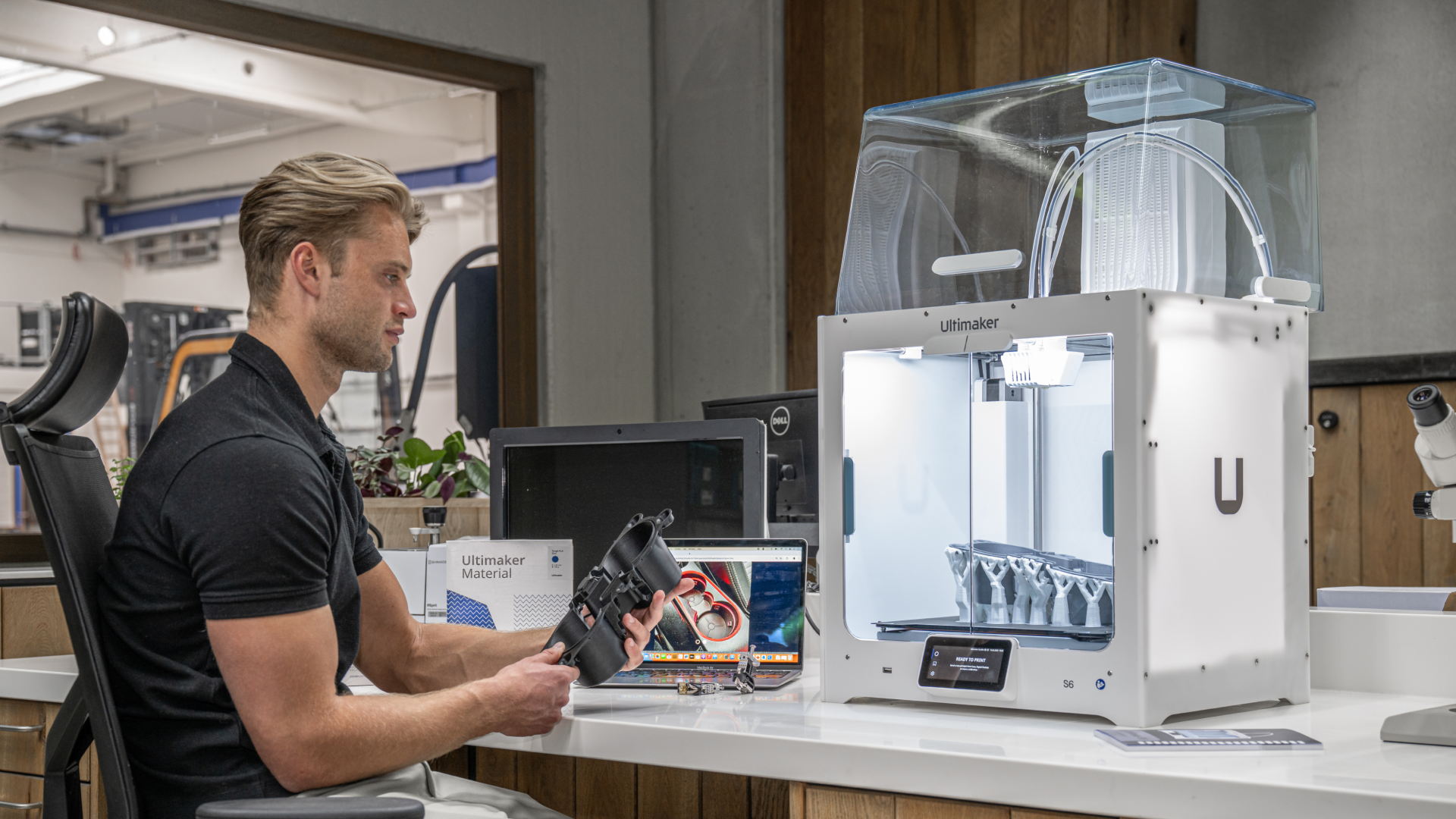
The UltiMaker S6 at ~$7,000 without talking to an S6 owner first. On paper it's right — Cheetah motion planner, 500 mm/s, 300+ material profiles, 24-month warranty. But across three research passes, Facebook groups, and Reddit, no independent long-term S6 owner voices were found anywhere — the quoted "owners" are UltiMaker-supplied testimonials. The S5's used market tells the depreciation story: a complete working S5 kit sold for $300 AUD in Aug 2026, and owners are dumping sealed 2.85 mm filament at ~50% off. No validated community backs the S6 yet.
Raise3D Pro3 as a value pick. At $4,599+ it sells on 180+ tested material profiles, real US/EU support, and a 2-year warranty — genuine value if a business needs a support contract. But the base Pro3 is a 2022 platform at 30–150 mm/s; the HS (from $5,599) is the actual 2026 machine. The warranty excludes consumables — hotends, nozzles, plates, filters, fans are owner-paid — and a Pro3 Plus with 17 days of print time changed hands for roughly $300–400. Against an H2D at $1,549 street or an H2S at $1,249, the Pro3's price is support-contract pricing, not printer pricing. Also logged: a single April 2026 owner report of a Pro3 Plus catching fire overnight, thermal-runaway protection questioned. One data point, not a pattern — but ask before a machine sleeps in your office unattended.
The fine print
Running costs. Multicolor systems tax you in plastic: the H2S's AMS purging is wasteful (the H2D's dual nozzles mitigate it; the XL+'s toolchanger eliminates it). PVA soluble supports run ~$60/kg from Bambu. Flashforge's proprietary nozzles cost more than commodity hotends. Raise3D's consumable exclusions mean hotends and plates come out of your pocket. 2.85 mm Ultimaker filament carries an ecosystem tax you'll feel when you try to leave.
Failure modes the spec sheets hide. The H2D's complexity is its maintenance bill: 2026 forum threads report extruder disassembly, heater-unit replacements, and exhaust-valve malfunctions on high-volume workloads. The Guider 3 Ultra's dual extrusion uses a purge tower, not a bucket — oozing and stringing, and one 2023-era owner documented stringing snowballing into a molten blob that killed both printheads.
Support and software. Prusa: best in class — 2-year EU warranty, 60-day returns, Prague-based humans. Bambu: 2-year US/EU warranty, parts stocked regionally — but ticket/chat only, on their most complex machine. Creality: "lifetime support" on paper, tickets going silent for weeks in practice — budget your own spares. Flashforge: dealer-mediated; the 2024 case where the dealer refused an RMA the manufacturer had agreed to is the failure shape to watch. UltiMaker: reseller-level service, Hot Swap under UltiMakerCare. QIDI: historically responsive (SSR kits shipped fast), but the Plus5 is too new to judge. Software freedom runs from Klipper with root access (K2 Plus) and fully offline open firmware (Prusa) to closed cloud ecosystems (Bambu) — with Flashforge heading the wrong way: a mandatory Flash Studio fork carrying a paid-subscription ad inside the printer-management view.
The bottom line
CORE One+ if reliability and support are the job. H2S if you want the most capable big enclosed printer for the least money. XL+ if multi-material engineering parts are the actual work — nothing else purges nothing. K2 Plus if you're building a farm and accept being your own support department. Plus5 if you're comfortable being an early adopter at $749. Guider 3 Ultra if you need 600 mm of Z and understand the chamber and slicer caveats. S6 or Pro3 only if procurement demands it — you're paying for the institution, not the machine. Skip the Plus4 unless it's cheap with a verified SSR board. Skip the H2D laser combos unless you own workshop extraction. And if what you actually need is one great workhorse under $1,300: the H2S is sitting right there.
Sources
- 3dtechvalley.com — retrieval date not recorded
- stacksheriff.com — retrieval date not recorded
- forum.bambulab.com — retrieval date not recorded
- forum.bambulab.com — retrieval date not recorded
- forum.bambulab.com — retrieval date not recorded
- forum.bambulab.com — retrieval date not recorded
- makers101.com — retrieval date not recorded
- blog.bambulab.com — retrieval date not recorded
- 3dmag.com — retrieval date not recorded
- bambulab.com — retrieval date not recorded
- fauxhammer.com — retrieval date not recorded
- creativebloq.com — retrieval date not recorded
- hackster.io — retrieval date not recorded
- 3dprint.com — retrieval date not recorded
- dynamism.com — retrieval date not recorded
- bambuhub.net — retrieval date not recorded
- fauxhammer.com — retrieval date not recorded
- sourcegraphics.com — retrieval date not recorded
- youtube.com — retrieval date not recorded
- forum.bambulab.com — retrieval date not recorded
- forum.bambulab.com — retrieval date not recorded
- youtube.com — retrieval date not recorded
- fabbaloo.com — retrieval date not recorded
- youtube.com — retrieval date not recorded
- makers101.com — retrieval date not recorded
- layerdepth.com — retrieval date not recorded
- shopabunda.com — retrieval date not recorded
- 3dtechvalley.com — retrieval date not recorded
- forum.creality.com — retrieval date not recorded
- forum.creality.com — retrieval date not recorded
- forum.creality.com — retrieval date not recorded
- minimal3dp.com — retrieval date not recorded
- github.com — retrieval date not recorded
- github.com — retrieval date not recorded
- consumerrights.wiki — retrieval date not recorded
- 3dprint.com — retrieval date not recorded
- 3dprint.com — retrieval date not recorded
- 3dtechvalley.com — retrieval date not recorded
- 3dprinteddecor.com — retrieval date not recorded
- klipper.discourse.group — retrieval date not recorded
- bestchina3dprinters.com — retrieval date not recorded
- top3dshop.com — retrieval date not recorded
- forum.prusa3d.com — retrieval date not recorded
- youtube.com — retrieval date not recorded
- fauxhammer.com — retrieval date not recorded
- forum.prusa3d.com — retrieval date not recorded
- forum.prusa3d.com — retrieval date not recorded
- prusa3d.com — retrieval date not recorded
- forum.prusa3d.com — retrieval date not recorded
- help.prusa3d.com — retrieval date not recorded
- d33gy59ovltp76.cloudfront.net — retrieval date not recorded
- youtube.com — retrieval date not recorded
- prusa3d.com — retrieval date not recorded
- forum.prusa3d.com — retrieval date not recorded
- github.com — retrieval date not recorded
- forum.prusa3d.com — retrieval date not recorded
- help.prusa3d.com — retrieval date not recorded
- help.prusa3d.com — retrieval date not recorded
- news.ycombinator.com — retrieval date not recorded
- prusa3d.com — retrieval date not recorded
- forum.prusa3d.com — retrieval date not recorded
- github.com — retrieval date not recorded
- qidi3d.com — retrieval date not recorded
- fabreeko.com — retrieval date not recorded
- shopabunda.com — retrieval date not recorded
- github.com — retrieval date not recorded
- github.com — retrieval date not recorded
- 3dput.com — retrieval date not recorded
- 3dbgprint.com — retrieval date not recorded
- qidi3d.com — retrieval date not recorded
- youtube.com — retrieval date not recorded
- youtube.com — retrieval date not recorded
- youtube.com — retrieval date not recorded
- gamingtrend.com — retrieval date not recorded
- technewstube.com — retrieval date not recorded
- youtube.com — retrieval date not recorded
- china-thrive.com — retrieval date not recorded
- aniwaa.com — retrieval date not recorded
- fabbaloo.com — retrieval date not recorded
- ubuy.cr — retrieval date not recorded
- s1.raise3d.com — retrieval date not recorded
- s1.raise3d.com — retrieval date not recorded
- 3dprintersdepot.com — retrieval date not recorded
- reviews.birdeye.com — retrieval date not recorded
- top3dshop.com — retrieval date not recorded
- ultimaker.com — retrieval date not recorded
- matterhackers.com — retrieval date not recorded
- shop3duniverse.com — retrieval date not recorded
- bhphotovideo.com — retrieval date not recorded
- ultimate3dprintingstore.com — retrieval date not recorded
- ultimaker.com — retrieval date not recorded
- modernplasticsindia.in — retrieval date not recorded
- engtechnica.com — retrieval date not recorded
- manufactur3dmag.com — retrieval date not recorded
- ultimaker.com — retrieval date not recorded